A Podcast Called FRED #9

Join Ash, Kendall, and Phillip as they deliver this week’s round-up of nerdy news and geeky goodness in the pop culture podcast that refuses to behave—A Podcast Called FRED.
Let us know your response to this week’s Popcorn Culture question to be featured in the next episode of A Podcast Called FRED!
FRED Watch Quickie Film Review: Riot (2018)
HISTORIC MOMENT SPARKLES.
I’m a Wayne Stellini and welcome to FRED Watch, where we review everything from the mainstream to the obscure. Today’s film is Riot…
Werner Film Productions / Australian Broadcasting Corporation
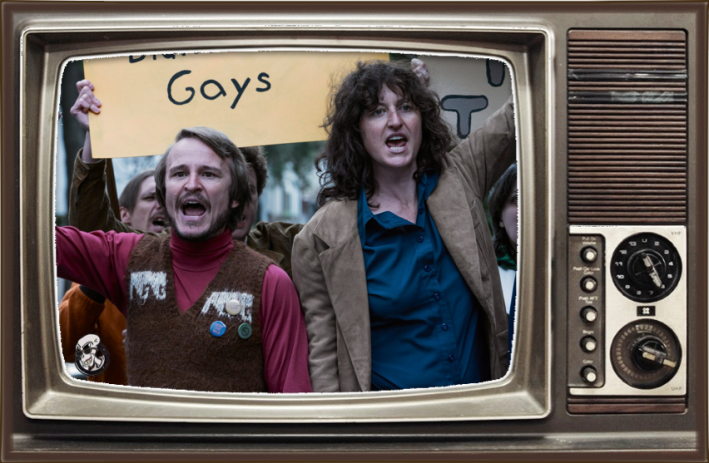
In 1978, with the momentum to decriminalise homosexuality diminishing, a group of queer activists decide to take a different approach to their protesting and petitioning. Led by former union boss Lance Gowland (Damon Herriman), the activists choose to celebrate who they are in a public display of fancy dress and music down Sydney’s Oxford Street.
But ongoing tensions with the police promise to erupt into a mêlée…
Following the final curtain call, FRED the ALIEN Productions sent out surveys to those who had attended the 2018 Midsumma Festival season of our play Michael and Phillip Are Getting Married in the Morning. As always, the responses are as diverse as our audience—generally positive, nonetheless—but a bit of feedback made me scratch my head. This person felt that it “was a bit weird” that the character Graeme (Jeffrey Bryant Jones) would disown his son Michael (Bayne Bradshaw) in a violent rage because of Michael’s sexuality. Unfortunately, there is a long history of LGBTQIA+ individuals who would not find that weird at all. But if such a scenario is perceived to be relegated to the past, and coming out is no longer a potentially devastating scenario, then the telling of queer social, cultural, and civil rights histories has never been more important. With marriage equality still new to Australia, our collective memories surely cannot be that short?
Regardless, there is no questioning the appropriate and continued relevance that a film such as Riot has.
This is because the Sydney Gay and Lesbian Mardi Gras is one of Australia’s biggest tourist events and most colourful of street parties. It remains a contention among conservatives, but the slow swirl of social and civil progress has meant that the celebration of all things queer has persisted to increase in popularity and participation since its 1978 inception. Back then, it was a protest where a brave group of resilient individuals put everything on the line for appreciation, dignity, and respect. Forty years later, the Australian queer community was awarded marriage equality and its associated legal benefits, but more needs to be done. It is in this spirit that Riot finds itself as a timely and necessary history lesson. Anti-discriminatory laws, social acceptance, and increasing civil rights make it easy for millennials to not truly appreciate the protections they have inherited from previous generations of activists.
Furthermore, it is great to see the collective known as the 78ers given individual names, personalities, and complexities. So it is also no surprise, then, that the people here are the most interesting component. As they manoeuvre through the political and social tensions of the 1970s, our story sweeps through a number of significant moments in history, covering obstacles and mini-milestones through the eyes and experiences of our ensemble, particularly Lance Gowland and Marg McMann, played with exceptional sincerity by Damon Herriman and Kate Box.
Riot, however, sometimes prioritises the politics over the people, making it difficult to have a strong level of attachment to everyone here. The film would have perhaps worked better as a miniseries, benefitting from an exploration of the political and social dynamics in greater detail, thereby allowing itself to delve into the characters impacted by them. For example, the gender politics and in-fighting between some of the gays and lesbians in the Campaign Against Moral Persecution is fascinating, but there simply isn’t enough running time to discuss the impact conflicting standpoints have on such an important social movement.
Although painted in broad stokes, Riot all comes together exceptionally well in the final act, where the first Mardi Gras takes place—talk about humble beginnings!—and its immediate ramifications reinforces the need to keep telling queer stories to a mainstream audience. 3½ / 5
Starring: Damon Herriman, Kate Box, Xavier Samuel, Jessica De Gouw, Josh Quong Tart, Kate Cheel, Eden Falk, Luke Fewster, Benedict Hardie, Patrick Jhanur, Hanna Mangan Lawrence, Shaun Martindale, George Mulis, Luke Mullins, Fern Sutherland.
Director: Jeffrey Walker | Producers: Louise Smith, Joanna Werner | Writer: Greg Waters (Story: Carrie Anderson) | Music: David Hirschfelder | Cinematographer: Martin McGrath | Editor: Geoffrey Lamb
Available: ABC iView (until 27 March 2018) and DVD
Let us know what you thought of this film in the comments!
I’ve been a Wayne Stellini and you’ve just experienced FRED Watch.
The Monthly @ WiniFRED’s #08
 Fulya and Kendall are back with another episode of The Monthly.
In this installment, they metaphorically/hallucinatory give out Golden FRED Heads in their first annual WiniFRED’s Pop Culture Awards, as voted by you!
Categories:
◼ ︎Best Pop Culture Moment
◼ Most Underrated Performance
◼ Best Musical Moment
◼ Best TV Lead Character/s
◼ Best Superhero Movie
Check it out and let us know if you agree with the listeners’ choices in the comments!
FRED Watch Quickie TV Review: Don’t Ever Wipe Tears Without Gloves (2012)
GLOVES OFF, TISSUES READY…
I’m a Wayne Stellini and welcome to FRED Watch, where we review everything from the mainstream to the obscure. Today’s TV series is Don’t Ever Wipe Tears Without Gloves (Torka aldrig tårar utan handskar)…
Sveriges Television
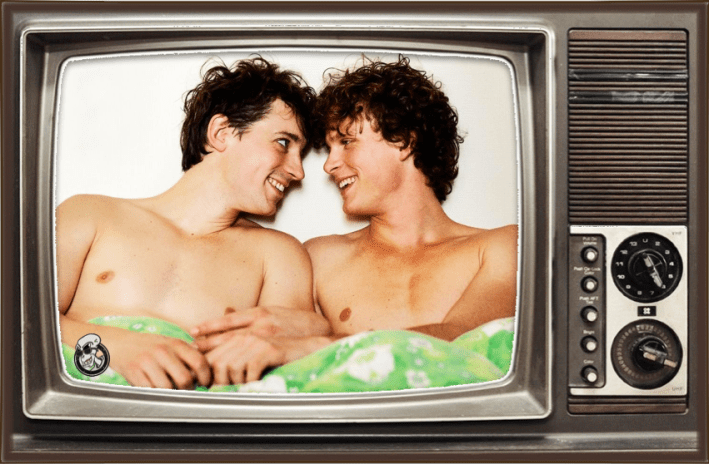
In 1982, practicing Jehovah’s Witness Benjamin (Adam Lundgren) meets Rasmus (Adam Pålsson), a university graduate who has just moved to Stockholm from his rural home.
Embraced by a new group of gay friends, Benjamin and Rasmus fall in love while going through the process of self-exploration and discovery. And then a lethal disease impacts their tight-knit community…
It is best to brace yourself when approaching a story about the devastating consequences of the HIV/AIDS virus that is set during a time when the recipients of the disease’s wrath were primarily young gay men. Productions about the early days of the AIDS epidemic are plentiful, and they tend to be either deeply impactful or manipulative fodder. Thankfully, Simon Kaijser helms Don’t Ever Wipe Tears Without Gloves with skilful restraint and care, keeping the material in a believable world and away from the all-too-easy realms of melodrama. Stylistically, Stefan Kullänger’s cinematography, as well as Agneta Scherman and Kaijser’s editing, make this an aesthetically effective production.
Best-selling author Jonas Gardell’s screenplay, which coincided with the release of three novels (2012-2013), is a beautifully woven tale in which present, past, and multiple stories are linked seamlessly. Do not be mistaken, all the usual character and narrative tropes are there, but it works in the the story’s favour. There are an abundance of characters to get to know and understand; such shorthands make them easily accessible, but nonetheless complex, interesting, and relatable.
Our protagonist Benjamin is played with stunning purity by Adam Lundgren (a quality that Björn Kjellman carries through as the character in the present time scenes), whose inner conflict with his religion and the interpersonal tensions with his parents (solid work from Marie Richardson and Gerhard Hoberstorfer) demonstrate the actor’s phenomenal range. For example, just watch Lundgren in an emotional scene in which Benjamin fights for public acknowledgement against the wishes of Rasmus’s parents, played by the incredible Stefan Sauk and Annika Olsson. Such a moment brings to the forefront the underlying loneliness to Benjamin, insofar that he apparently cannot truly fit in with the religious customs with which he has grown, nor can he genuinely be himself among his fellow social outcasts.

Benjamin (Adam Lundgren) is given multiple reasons to weep, but who will wipe his eyes? (Main Image: Sveriges Television)
As Rasmus, Adam Pålsson possesses all the fearlessness that comes with youth and beauty; this makes his trajectory even more heartbreaking, and Pålsson holds his own alongside the aforementioned talent. More open to sexual exploration than Benjamin, Rasmus serves as a complementary and contrasting figure to his partner. Pushing this further is Simon J. Berger, whose portrayal of unapologetic, flamboyant queen Paul is a refreshing consistent throughout the series. In spite of it all, Paul refuses to be anything but fabulous with a touch of kitsch charm.
All these characters, plus others, are drawn together in a world afraid of an unknown, ruthless disease; a world in which contemporary history’s most discriminated against people become even more vilified. So, one must ask: At a time when the progressive world continues to move towards greater equality for its queer community, is a series such as Don’t Ever Wipe Tears Without Gloves really necessary? The answer is a resounding yes. And allowing yourself to be taken into this three-hour experience is heartbreaking, rewarding, and humbling all at once.
Please watch it. 5 / 5
Starring: Adam Lundgren, Adam Pålsson, Simon J. Berger, Emil Almén, Michael Jonsson, Christoffer Svensson, Kristoffer Berglund, Annika Olsson, Stefan Sauk, Marie Richardson, Gerhard Hoberstorfer, Ulf Friberg, Björn Kjellman, Jonathan Eriksson, Claes Hartelius, Belle Weiths, Gorm Rembe-Nylander, Alexi Carpentieri, Lisa Linnertorp, Maria Langhammer, Sanna Sundqvist, Jennie Silfverhjelm, Julia Sporre.
Director: Simon Kaijser | Producer: Maria Nordenberg | Writer: Jonas Gardell | Theme Music Composer: Andreas Mattsson | Cinematographer: Stefan Kullänger | Editors: Agneta Scherman, Simon Kaijser
Available: DVD, Blu-ray and SBS On Demand
Let us know what you thought of this TV series in the comments!
I’ve been a Wayne Stellini and you’ve just experienced FRED Watch.
Quick Eurovision Update #1

Image sourced from eurovisionworld.com
Eurovision fanatic Fulya delivers a quick update on her favourite music event of the year!
Click on the video below to stay in the know. And remember to subscribe to YouTube.com/FTAchannel to keep in the loop about everything Eurovision 2018!
You can also relive Fulya’s reactions to the Eurovision 2016 Grand Final:
Let us know your thoughts about everything Eurovision in the comments!
FRED Watch Quickie Film Review: Black Panther (2018)
BLACK IS BEAUTIFUL!
Welcome to FRED Watch, where we review everything from the mainstream to the obscure. Today’s film is Black Panther…

Marvel Studios / Walt Disney Studios Motion Pictures
T’Challa (Chadwick Boseman) returns home to the isolated and technologically advanced African nation of Wakanda to take his place as King.
However, when an old enemy reappears, T’Challa’s fortitude as King and superhero Black Panther is tested when he is drawn into a conflict that puts the entire fate of Wakanda and the world at risk…
Kendall Richardson reviewing (2018):
Nothing gets me more hyped for the trip to the cinema than the prospect of the latest Marvel Studios production. I’m an avid fan and follower of all things Marvel Cinematic Universe (MCU), so when the time comes around to go and see their latest release for the first time, I am literally jumping up and down with excitement. As it was with Black Panther, the eighteenth film on the MCU’s roster, and the first release of its tenth anniversary year, needless to say, I had a blast.
Marvel has the superhero origin story film down to a fine art now, as they should, but it is with Black Panther that they have done one of the best things yet—show diversity. Whilst they are sadly lagging in the female lead superhero game, Marvel have proven to the public that they can tell a story with a cast that is 98% black and have it be beyond the success they dreamed of. (Earning over $200 million in it’s opening weekend, the film is the second highest debut of the MCU behind 2012’s The Avengers.) They have made a movie where the hero is a proud African warrior and king, who is supported by the strongest women—nay African women—I have ever seen on screen, and opposed by an incredible African-American villain that some are saying could give Loki a run for his money. It is just so beautiful to see these characters displayed before our eyes, and in roles young kids can look up to and admire, particularly those who share the colour of their skin with the Black Panther himself. And this film could really not have come at a better time. With the Black Lives Matter movement still prominent across the globe, race is still one of the biggest issues out there. Hopefully Black Panther can serve not only as a vehicle to entertain, but to inspire and teach as well.
As for the film itself, it is sad to say that it is a little slow to start, until the momentum of the plot and its action fully kick in, but that isn’t to say it’s not enjoyable, because it is. We get a beautiful rendition of the history of Wakanda and the Black Panther, as well as wonderful introductions to each of the characters that make up that beautiful nation. T’Challa (Chadwick Boseman) returns home after the death of his father King T’Chaka (John Kani), which occurred in Captain America: Civil War (2016), to assume the throne, but it’s not that simple, and I love it. There is so much tradition alongside the beauty of the Wakandan people, as T’Challa must fight any man that challenges him for the throne and for the powers of the Black Panther. Meanwhile, Ulysses Klaue (Andy Serkis), whom we last saw losing an arm in Avengers: Age of Ultron (2015), is on the prowl for more vibranium, and with a new robotic arm to boot. Here is where we meet the real villain of the piece, Erik Killmonger, played with uncompromising intimidation by Michael B. Jordan. The two may have teamed up for this heist, but it soon becomes clear that Killmonger has an agenda all his own.

Marvel Studios / Walt Disney Studios Motion Pictures
Boseman is definitely more than capable of leading this film; he is wonderful as T’Challa, and it was great to see what he could do outside of Civil War. Serkis takes the eccentric up a notch with this version of Klaue, and it is sinister and hysterical. Fellow Middle-Earthling Martin Freeman surprised me with his return as CIA agent Everett Ross, who was also last seen in Civil War, but this time around there is more for him to do. And whilst we don’t get too much of his character fleshed out, how his involvement becomes crucial to the film’s plot is awesome. I’m always here for more Freeman, even if he is putting on that American accent.
But my favourite thing about this film is the ladies! As a lady myself, I may be a tad biased but they really are the best thing here. First you have Shuri (Letitia Wright), T’Challa’s sixteen-year-old technology and science genius sister, who is responsible for most (if not all) of Wakanda’s current tech, and the Black Panther’s suit and gadgets. Then there is Nakia (Lupita Nyong’o). And while she may be T’Challa’s ex, for now, she is also an awesome fighter and spy. I hope her and Black Widow get to have spy training reminiscing/bonding time at some point. And thirdly, there is the badass general and leader of the Dora Milaje, Okoye (Danai Gurira). She loves her country more than anything and will smack a bitch down the second it is called for. She is the sass queen in this film and I love her. All three of these actors are so strong and incredible in their performances as great Wakandan women, I cannot wait to see more of them down the track.
Director/co-writer Ryan Coogler has given us a fantastic film, which beautifully shows off the fictional nation of Wakanda and its people. With the MCU tending to expand further into space, it is great to see that there is some wonderful unexplored territory for them to showcase at home. Wakanda forever! 4 / 5
Wayne Stellini reviewing (2020):
Applauded for its strong representation of and featuring a predominantly black cast, Ryan Coogler’s film may be aesthetically refreshing for a blockbuster, but Black Panther only works if it achieves what it sets out to do. Fans of the Marvel Cinematic Universe (MCU) will be pleased to discover that this, the eighteenth entry into the franchise, doesn’t stray from the established formula.
Thus, Black Panther doesn’t offer anything new in presenting the detailed backstory to the titular hero, who had been introduced to the franchise in the superior Captain America: Civil War (2016). However, Coogler is a skilled storyteller and gives more depth to his principal characters than you might expect from a comic book movie.
Chadwick Boseman and particularly Michael B. Jordan shine as feuding cousins T’Challa and N’Jadaka, both of whom have claims to the throne that would not only see them rule the small African nation of Wakanda but also don the Black Panther suit. Letitia Wright is fun as T’Challa’s younger sister Shuri, beautifully capturing the nuances of technologically savvy teenagers; it is particularly lovely to see a young woman given so much screen time because of her brains and not just her looks. Shuri showing T’Challa his superhero clothing and gadgets is a gorgeous nod to Q doing the same with James Bond for over fifty years.
There’s also plenty of action and the climax is well done, but Black Panther suffers from inconsistent pacing, so the momentum isn’t always maintained. And whilst there is also a lot of information to convey when introducing a new world to your audience, the 134-minute runtime not only feels unnecessary but is sometimes exhausting. Most significantly for this genre, the computer generated effects are surprisingly weak; a major problem for a franchise whose main drawcard is its visual exuberance. So, while Marvel Studios should be applauded for diversifying its legion of superheroes, you can’t help but ask how much faith they actually had in the project to shortchange its budget.
It must be said, however, that Black Panther’s story and its central characters stand the test of time (even though the visuals won’t), and ultimately that’s what makes a successful comic book movie. Overall, this is an entertaining adventure. 4 / 5
Starring: Chadwick Boseman, Michael B. Jordan, Lupita Nyong’o, Danai Gurira, Martin Freeman, Daniel Kaluuya, Letitia Wright, Winston Duke, Angela Bassett, Forest Whitaker, Andy Serkis.
Director: Ryan Coogler | Producer: Kevin Feige | Writers: Ryan Coogler, Joe Robert Cole (based on Black Panther by Stan Lee and Jack Kirby) | Music: Ludwig Göransson | Cinematographer: Rachel Morrison | Editor: Michael P. Shawver, Claudia Castello
Available: Disney+, Google Play, and YouTube.
Let us know what you thought of these films in the comments!
You’ve just experienced FRED Watch.
Kendall Richardson’s review was first published on Thursday, 22 February 2018. It was updated to include Wayne Stellini’s review and the film’s online viewing availability on Thursday, 23 April 2020.
FRED Watch Episode 2: Fortress (1985)
REVISITING A FORGOTTEN OZPLOITATION CLASSIC!

HBO
Wayne introduces Phillip to one of his all-time favourite Australian films, the underrated Ozploitation classic Fortress. Phill confesses to not liking scary movies, but will he be captivated by this Outback thriller?
Listen to their review here:
Check out the trailer:
Starring: Rachel Ward, Sean Garlick, Elaine Cusick, Laurie Moran, Marc Aden Gray, Ray Chubb, Bradley Meehan, Rebecca Rigg, Beth Buchanan, Asher Keddie, Anna Crawford, Richard Terrill, Vernon Wells, Peter Hehir, David Bradshaw, Roger Stephen.
Director: Arch Nicholson | Producer: Raymond Menmuir | Writer: Everett De Roche (based on Fortress by Gabrielle Lord) | Music: Danny Beckermann | Cinematographer: David Connell | Editor: Ralph Strasser
Available: DVD (Region 1 only)
Let us know what you thought of this film in the comments!
You’ve just experienced FRED Watch.
Beta Test #3: Night in the Woods

Night in the Woods
Change. The daunting process of moving on and finding yourself. Whether it’s the change of growing up, or changing a job, or vomiting so hard you change your drinking habits for the first month of 2018… change is coming, and it is inevitable. So what can be done about the unsettling fear that so many of us feel crashing down when things start to turn? And what can we do to stay positive and let go of the past? Find out with me in this weird month.
Wazzup, nightmare eyes! I’m a Bethany Griffiths, and this is Beta Test. A game review platform where I—a vaguely more sober self-confessed noob—choose one game a month to go ham on until either I get better or get wrecked. This, all in the hopes that I can provide you with a completely unbiased review.

It’s February, my dudes, and like most people that love to make empty promises, I’ve only broken my New Year’s resolution three times! I know, what idiot makes the decision to do anything in January, other than starfish on the floor in front of the air con? Well, this girl apparently. Go me! But aside from the goal setting and parameters I’ve claimed, I’ve been losing myself in one of the best millennial games of 2017. So put down the smashed avocado, step away from the new Kesha album, and buy yourself a house because this one’s a good’n.
Yes, it seems like amongst bar soap and the American dream, the only industry the millennials aren’t apparently killing is the video game one.
Night in the Woods is a thoroughly enjoyable, story rich indie adventure game that sucks you right in from the start. Developed by Infinite Fall, and published by Finji, the game tackles some of the realer and more hard-hitting moments of early adulthood. It plays on the internal struggles of mental illness, the themes of gender and sexuality, and the way higher education is seen. It also explores the manner in which the presence of change in the universe is unsettling and the way people relate to each other through their own broken ways. It is a true critique on the modern age.
Throughout the game, we are able to see these themes through the eyes of the main character, Mae. As a hotheaded gal who has a great fear of letting go of the past, I really identified with her character. And not because she and I have a habit of throwing-up drunk at parties (i.e. the reason I’m sober this month), but because of the way she identifies with her fears and anxieties. Night in the Woods really played on this theme of insight, using a higher intuition to solve where you are and where you’re going to be.
I got the sense that Mae knew too much; she was so highly in tune with the ethereal elements of the world, but so painfully out of focus with the rest of the space. She was pent up and felt like she always had to perform to please people, all the while thinking she’s an embarrassment and a disappointment. Mae’s character is juvenile and impulsive. She gets reckless fast and is prone to bursts of mania, some of which could be seen as confronting if the player is sensitive. Her highly guarded nature is driven by anxiety and repression, and the way she gets it all out is by smashing stuff and dissociating. Her character is genuine, though, and the love she has for her friends, family, and neighbours is both real and warming. For a character with that much thought and depth, I give huge props to the writers. And that doesn’t even include the rest of the main band: Bea, Greg, Angus, Germ, and Lori all have backstories just as deep.
Night in the Woods boasts an impressive narrative that drives the game from a mediocre platform jumper to a true iconic piece of game design. The way the characters interact with each other and the sheer amount of thought that went into the NPC’s is astounding. Almost everyone in town having their own string of dialogue was a genius idea for someone like me who loves a good story with my game; the writing has a fantastic way of making you, the gamer, feel involved. The art style is simple and modern for a 2D render. The autumnal colours give a full, nostalgic view, as though we’re looking back on a constant memory. And the score is gorgeous too.
I love the way mundane activities are portrayed in this game. Having a conversation with your mum at the breakfast table, or filling out your journal feels pivotal, and real. (Which is funny, since the game nods at a fourth wall break in chapter three, making me *feel emotions*.) Because of the infinite reality Night in the Woods facilitates, and for the gorgeousness of all things score and script, I give this game:
5/5 Crimes for style
5/5 Crimes for plot line
3/5 Crimes for easiness
5/5 Crimes for millennial strength
That awkward middleground of not quite adult but not quite kid, too young to be stuck in the one spot but terrified of the outside world, is played with brilliantly. I saw myself reflected right back in so many incarnations of each of these characters. Being stuck in a job that pays the bills, dealing with my anger issues, trying to save what I can with my retail job, and getting professional help to stop my disassociation. It’s hard to not identify with at least one character here. The developers really took the time to understand what young adults are going through in the modern world and the way it impacts their lives. I am so grateful for that.
I’ve been a Bethany Griffiths, and this has been a sober, existential Beta Test. A game review platform where I either got better or got wrecked, in the hopes that I can provide you with a completely unbiased review.
Until next time…

Collectible Chaos: Top Ten Films of 2017

We’re well and truly into 2018, with some fantastic films already hitting the big screen.
FRED the ALIEN Productions’s resident pop culture queen Kendall Richardson looks back at last year’s cinema season to deliver her verdict on the top ten films of 2017!
Do you agree with her number one choice? Let us know in the comments.
Access the full Collectible Chaos playlist HERE.
You can also listen to Kendall every week in A Podcast Called FRED and monthly in The Monthly @ WiniFRED’s.
FRED Watch Quickie Film Review: Moonlight (2016)
THANK GOD FOR THE MOONLIGHT.
I’m a Wayne Stellini and welcome to FRED Watch, where we review everything from the mainstream to the obscure. Today’s film is Moonlight…

A24
Chiron, a painfully shy and heavily bullied boy, comes of age in the low socioeconomic Liberty City, Miami. He finds parental figures with drug dealer Juan (Mahershala Ali) and his girlfriend Teresa (Janelle Monáe), much to the suspicious disapproval of Paula (Naomie Harris), Chiron’s drug-addicted mother.
The dynamics and tensions among Chiron’s biological and surrogate families, his friends, and classmates set him on a path of emotional neglect and want.
Barry Jenkins’s beautifully photographed story pays homage to its unproduced stageplay roots, presented in three distinctive acts in which our protagonist Chiron goes from boy (played by Alex Hibbert) to adolescent (Ashton Sanders) to man (Trevante Rhodes). Because of this segmentation, Moonlight leaves plenty of information on the cutting room floor. What happens in the many years between the moments captured of Chiron’s troubled life are up to the audience to piece together or imagine.
The risk in such a narrative tool is that the audience is kept at bay, but Jenkins is a talented storyteller, drawing fine performances from Hibbert, Sanders, and Rhodes that their harmonious portrayals of Chiron keep us invested. Through Chiron, Jenkins presents a touching exploration of masculinity that shines like a full moon in a sky of tropes movie lovers are all too familiar with.
As Chiron’s surrogate parents, Ali and Monáe are stunning, suggesting that Moonlight could very well have been completely devoted to their complex relationship with the little boy lost and his mother. The importance of these early scenes is evident in the final act, in which Chiron reunites with childhood friend Kevin (André Holland). Here, Rhodes and Holland are heartbreaking, bringing to the surface the pain and loneliness we have been watching Chiron go through, when the narrative comes full circle.
Moonlight may have been a groundbreaking winner at the 2017 Academy Awards, but fanfare and accolades aside, it stands on its own as a beautiful portrait of masculinity. 4 / 5
Starring: Trevante Rhodes, André Holland, Janelle Monáe, Ashton Sanders, Jharrel Jerome, Naomie Harris, Mahershala Ali, Alex Hibbert
Director: Barry Jenkins | Producers: Adele Romanski, Dede Gardner, Jeremy Kleiner | Writer: Barry Jenkins; Story: Tarell Alvin McCraney (Based on In Moonlight Black Boys Look Blue by Tarell Alvin McCraney) | Music: Nicholas Britell | Cinematographer: James Laxton | Editors: Nat Sanders, Joi McMillon
Available: stan.
Let us know what you thought of this film in the comments!
I’ve been a Wayne Stellini and you’ve just experienced FRED Watch.
 FRED the ALIEN Productions